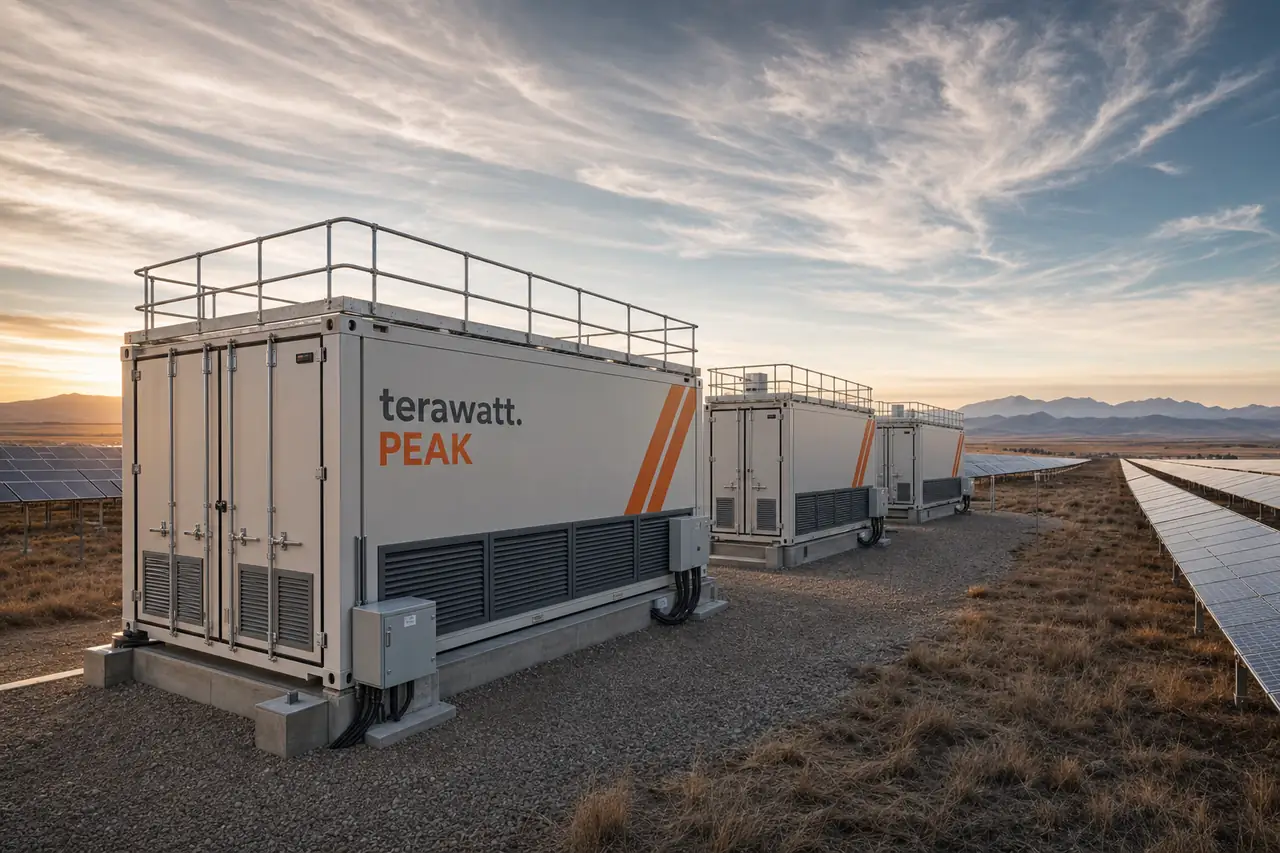
You’re billed on your worst half-hour. We flatten it.
We install batteries on big power sites to cut the demand charge. That charge is set by your highest half-hour of the month, and then you pay it all month long. The battery covers that spike, so you never get billed for it.
One spike sets your bill. Batteries flatten it.
On a commercial bill you pay twice: once for the power you use, and once for your highest moment of demand. Using less overall does not help. A battery charges when your site is quiet and discharges when it is busy.
One battery. Four charges it cuts.
The same battery works on four different charges at once. We size it against your real load so each one pays. Every saving shows up in Rands on your next invoice.
Lower your billed peak
Shaves the peaks that drive the biggest fixed penalty on the bill — the notified maximum demand charge.
Peak shaving
Discharges into your spikes so you never draw the expensive peak from the grid in the first place.
Tariff arbitrage
Charge at night when power is cheap, run off the battery when it is expensive. You bank the difference every day.
Power-factor correction
Cuts PF penalties — the charges you pay for drawing power inefficiently at the meter.
Backup through load-shedding is a benefit of having the battery — not the reason to buy it. The economics stand on a stable grid.
Watch the peak get cut.
This is a typical industrial day. Demand jumps around, and your bill is set by the worst jump. The battery fills the dips and covers the spikes, so the line you are billed on drops. Same work done, lower peak.
Indicative only. Assumes a battery sized to cover part of your peak and to run through the expensive hours. The demand charge is billed on your highest half-hour of the month. Your real number comes from interval data, not a slider.
Send your bill. We’ll do the maths.
Send one recent bill and we read it for you. We find what you pay for peak demand, show where the penalty sits, and work out what a battery removes. Free, and nobody phones you unless you ask.
We find it, fix it, and prove it.
Our software reads your bill and finds the penalty. The battery removes it. Then the software keeps checking, month after month, so the saving is measured and not just promised.
EnergyCloud reads the bill
The audit finds the peak-demand and time-of-use penalties hiding in your invoice — in Rands, on your real load.
Peak removes them
The battery is sized to your load. It cuts your billed peak and runs you through the expensive hours — the hardware that does the cutting.
EnergyCloud tracks it
It measures the avoided penalty every month, so the saving is on a dashboard — not in a brochure. See EnergyCloud →
Peak demand down 41%. Peak-time power down 38%.
This is a worked example of a typical job, not a real customer.* It shows where the money comes back: the battery cuts your billed peak, and it charges cheaply at night to run through the expensive hours.
Wrong size, wasted money. We size it right.
Battery economics depend on getting the size right. Too big and it never pays back. Too small and you still get billed for the peak. We size yours off your real half-hourly load, then keep watching it after install. Registered with NERSA, B-BBEE Level 2, based in Durban.
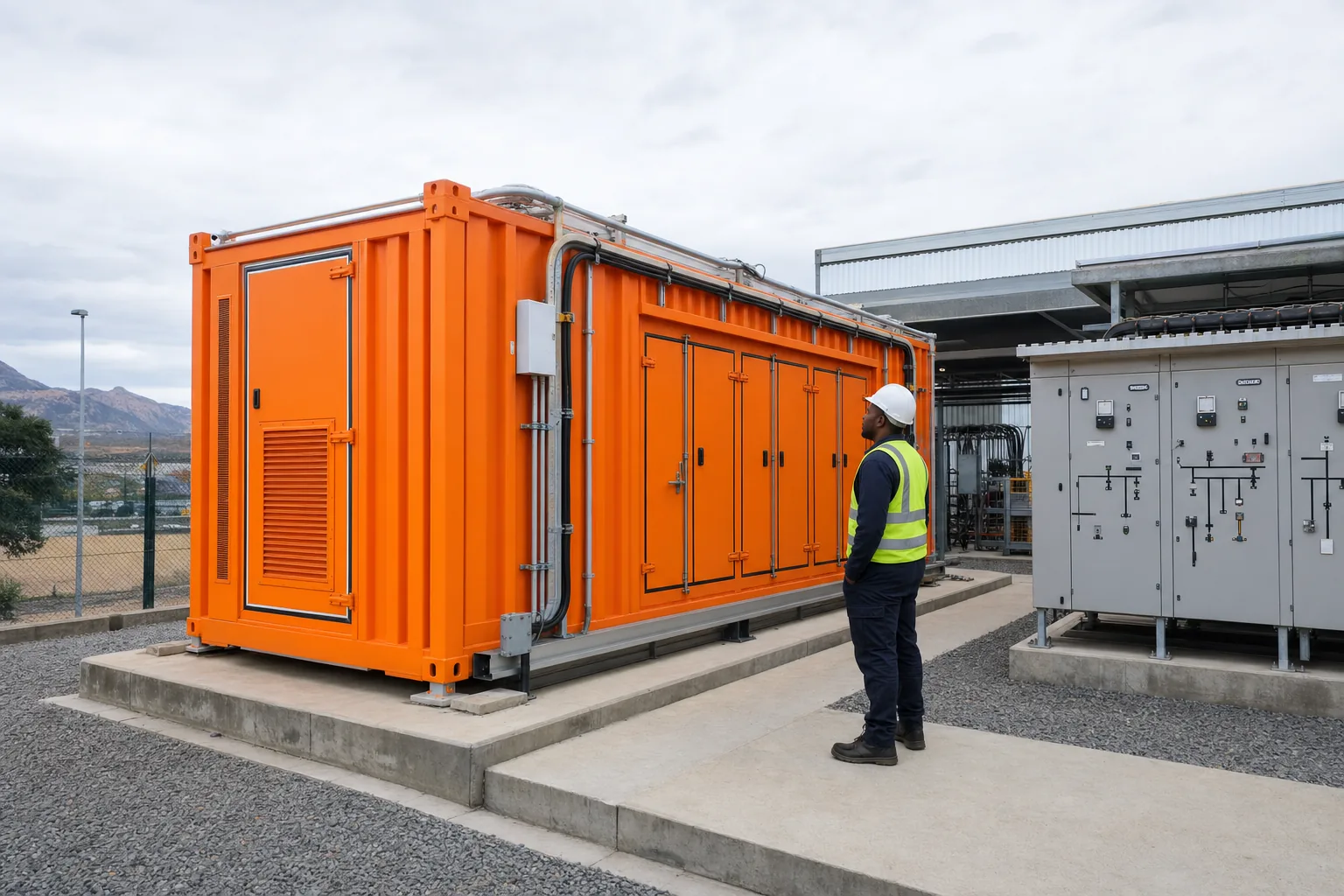
The installation was done professionally and according to schedule. Now that the system has been in operation for over a whole month, the benefits are clearly tangible and according to forecasts. I have no hesitation in recommending Terawatt Solar for other installations.
Sized off real interval data
We model against your actual half-hourly load — not a nameplate or a best-case brochure.
In-house engineering
One team designs, builds and commissions. The people who sized it answer the phone in year five.
LFP cells · 10-year warranty
Lithium-iron-phosphate only — the safe, long-cycle chemistry. Warranted for 6,000 charge cycles.
Continuous dispatch monitoring
EnergyCloud watches every dispatch, so the peak stays shaved and drift is caught, not discovered.
NERSA-registered · Level 2
Compliant by default, B-BBEE Level 2, Durban-based — accountable for the asset over its life.
References under NDA
Real per-site numbers and contactable references, shared privately on request.
Spiky load. Heavy penalties.
If your site draws hard in short bursts, you are paying a permanent penalty for a few minutes a month. The spikier your load, the more a battery saves you.
Motor-start spikes
Big machines pulling hard on start-up set the demand peak in seconds. The battery absorbs the inrush so the meter never sees it.
Compressor cycling
Refrigeration compressors cycle hard against the heat of the day. Storage flattens the cycling and holds temperature through the peak window.
Intermittent heavy draw
Batch plants draw in bursts — crushers, mixers, dryers. The peak is brief, the bill isn't. A battery bends it back down.
Brief peak, permanent bill
Wherever your highest half-hour sets a charge you pay all month, that peak is shaveable — and worth the analysis.
Send one bill. See your number.
Send one recent bill. We show you what a battery takes off your peak charges, in Rands. Free, written answer, no sales pitch.